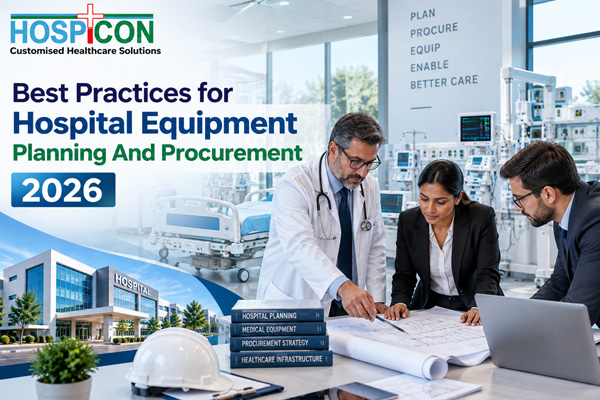
Hospital equipment is a vital component in the diagnosis, therapeutic process, monitoring, surgery, patient care and routine clinical activities. The process of selecting the right equipment goes beyond just looking at product specifications and involves the clinical needs, space, infrastructure, staff, maintenance requirements, and future expansion needs within a healthcare facility. Hospital Equipment Planning offers a systematic method for determining and planning for these needs prior to equipment purchase.The right equipment can help to create a more efficient and streamlined healthcare setting.
HOSPICON is a healthcare planning and consultancy firm for hospital development projects. A coordinated approach can assist project teams to link equipment requirements to departments, room layouts, utilities, medical gases, electrical systems and project workflow, as well as connecting with other infrastructure requirements.Effective procurement planning can also minimize unnecessary procurement concerns and enhance clinical team, architect/engineer, supplier and project management coordination.
Common Challenges in Hospital Equipment
There are many kinds of equipment in the hospitals used in various departments and each department has the individual clinical, operational needs. If not coordinated, some equipment specifications might not correlate to the room dimensions, utility connections, electrical loads, medical gas requirements, or workflow requirements.One of the other difficulties of course is working within the project budget.
These factors may affect the total value of an equipment investment.During equipment selection future requirements should also be taken into account. Technology in the healthcare industry is ever evolving and facilities may require more equipment, system upgrades or new equipment as services grow. If plans are made to be flexible, it can help minimize the challenges that may arise when changes are made in the future.
How a Structured Equipment Planning Approach Helps
The first step in a structured approach is to determine the clinical services and departments the hospital will offer. The requirements of the equipment can then be plotted based on patient capacity, clinical procedures, room functions, staffing and operational workflows.It should also be determined that the specification of the equipment used should match the building design as well.
Before finalising room layouts, it may be necessary to consider dimensions, installation requirements, electrical loads, water connection, drainage, medical gases, ventilation, data connectivity, and access requirements.It is also essential to have coordination among users and project teams. Clinical staff can supply information on operational needs and architects, engineers, planners and procurement can coordinate technical and infrastructure aspects.
Benefits of Proper Equipment Planning
Careful equipment planning can facilitate overall coordination of a hospital project, minimizing the potential for unnecessary changes during construction or installation.When designing rooms and departments, dimensions and installation requirements for equipment may be taken into account.
Improved Workflow
Equipment may be arranged based on clinical workflow, staff flow, patient movements and departmental relationships.
Better Budget Control
If equipment needs are identified at an early stage, a project team can make cost estimates that are more realistic.
Reduced Installation Issues
Compatibility issues can be minimised through co-ordination with other infrastructure such as electrical, plumbing, HVAC, medical gas etc.
Easier Future Expansion
A flexible plan can provide for the addition of more equipment or for changes in clinical needs.
Better Decision-Making
Clarifying specifications and documented requirements can help project teams to compare appropriate equipment options more systematically.
How to Plan Hospital Equipment Requirements?
It should start with a comprehensive evaluation of the services, functions, bed capacity, workload, procedures and clinical needs of hospital departments. Listening to some of these factors and then making an equipment list can give you a clear head start in further evaluation.The items should then be evaluated on technical specifications, space requirements, utility requirements, installation condition, maintenance, warranty and life expectancy.
The project team can use the equipment schedule to coordinate these items with architectural and engineering drawings.Priorities for equipment that is essential, supporting, and future equipment is also helpful. This enables project teams to plan procurement by project stage, budget, installation timeline, and department preparedness for installation.
Practices for Equipment Procurement
A good procurement process starts with technical and functional requirements that are well defined. Requirements should be determined by current clinical requirements rather than brand, aesthetics or up-front cost.The product quality, technical support, warranty, installation support, training, spare parts, maintenance services, delivery time and long-term support are some of the factors that need to be taken into account when evaluating vendors.
A comprehensive analysis can assist health care institutions in determining the implications of various purchasing choices.Documentation and coordination is also crucial all throughout the procurement. To ensure no unnecessary delays, the Hospital Equipment Procurement should be kept in sync with the project schedules, readiness of rooms, completion of infrastructures, delivery needs, installation, testing and commissioning.
Latest Trends in Hospital Equipment Planning
Digital healthcare, connected devices, smart monitoring, automation and data-driven clinical operations continue to impact the planning of hospital equipment. Equipment might require to relate with hospital information systems, electronic documents, networking setups, and various other digital platforms.
The other emerging trend is lifecycle planning. Beyond the initial cost of a purchase, hospitals are looking at energy usage, maintenance, software upgrades, replacement cycles, training, consumables, and long-term costs and operations.
Flexibility is also playing an increasingly critical role in the changing landscape of the healthcare environment and technologies. Medical Equipment Planning may also involve the capacity to upgrade, add equipment, alter clinical needs or flexible room infrastructure.
Why Choose HOSPICON?
Healthcare organizations and project owners can explore the possibility of working with HOSPICON to address the planning and equipment needs of hospitals in a coordinated way. The approach can be judged based on the project size, departments, clinical services, infrastructure, equipment requirements and development goals.
A coordinated planning process can help to gather together the clinical, architectural, engineering, equipment, procurement and future expansion needs. This can assist project teams develop a more streamlined process for hospital development.
Conclusion
These choices can impact the room layout, equipment planning, operating room requirements, budget, installation timeline, and long-term operation of the equipment. Using a structured approach can make sure that equipment needs are determined and organized prior to large procurement and installation projects.When planning for hospital equipment, the following factors should be taken into account: clinical needs, space, utilities, technical specifications, budget, maintenance, lifecycle costs, vendor support, and future growth needs.
HOSPICON offers healthcare planning solutions that can be considered based on a hospital development and equipment needs. By collaborating between clinical teams, planners, architects, engineers, and procurement teams, hospitals can create a more pragmatic and flexible equipment strategy.
FAQs
1. What does HOSPICON offer for hospital projects?
HOSPICON offers healthcare planning and consultancy services, which may be able to contribute to hospital development, infrastructure, design and equipment related needs.
2. Why is Hospital Equipment Planning important?
Hospital Equipment Planning assists with planning equipment needs in conjunction with clinical services, room configuration, infrastructure, workflows, budget and future expansion.
3. What should be considered during Hospital Equipment Procurement?
Technical specifications, clinical requirements, budget, installation, warranty, maintenance, training, spare parts, delivery and long-term support are all issues that should be taken into account by Hospital Equipment Procurement.
4. What is Medical Equipment Planning?
Medical Equipment Planning refers to determining, specifying, positioning and coordinating of the medical equipment based on hospital departments, clinical flow, infrastructure and operational needs.
5. Why choose HOSPICON for hospital planning?
Based on the scope of the project, clinical needs, infrastructure needs, equipment needs, and future development goals of the hospital, HOSPICON can be considered.
Recent Posts

Best Healthcare Consulting Services for Hospitals & Clinics in 2026

Best Hospital Marketing And Promotion Services for Healthcare 2026
Top 5 Hospital Feasibility Study Benefits, Steps & Key Factors 2026
Top Hospital Design Trends, Benefits and Planning Guide 2026