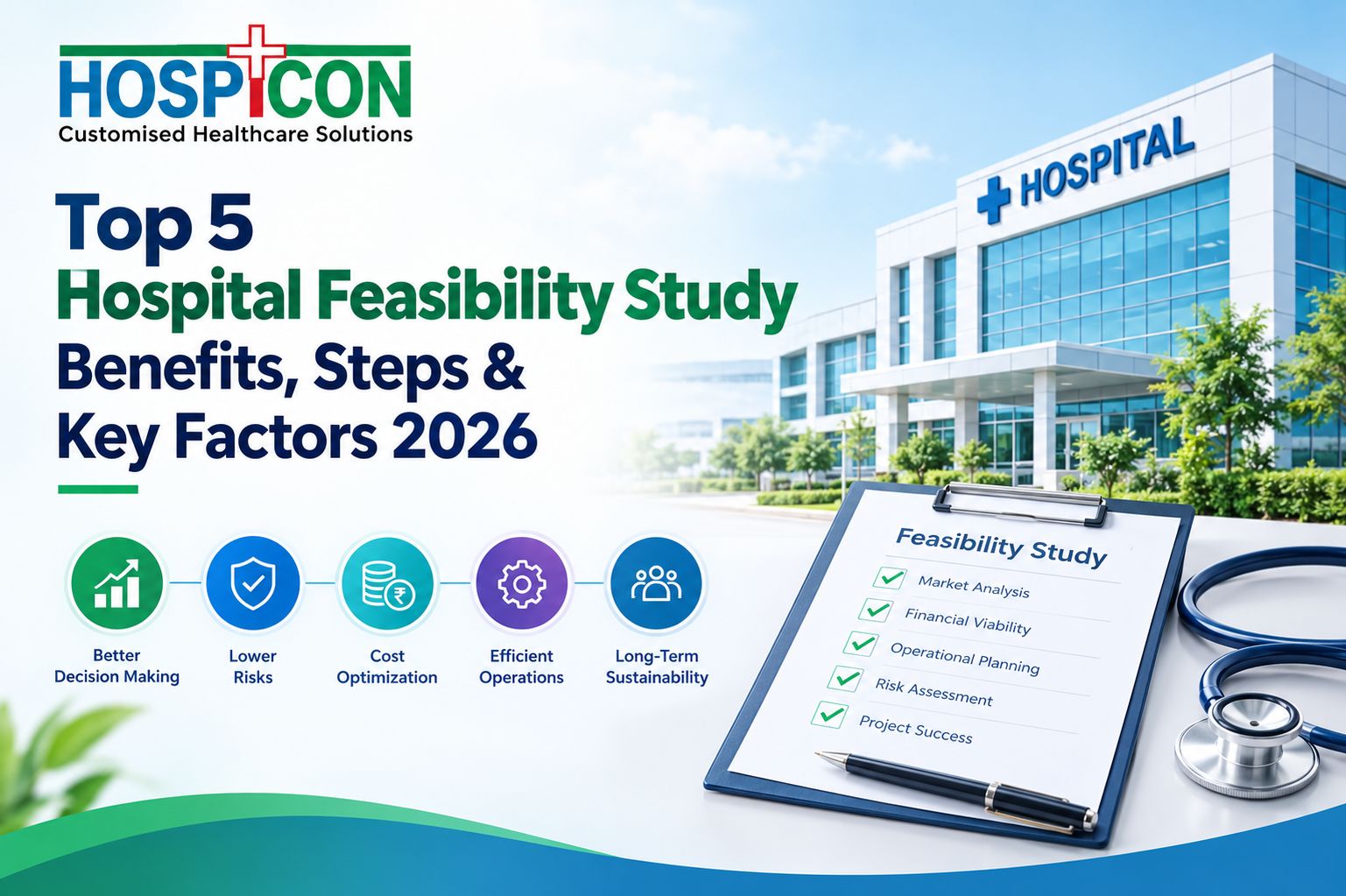
There more to planning a hospital than picking a site and calculating the cost of construction. Healthcare projects include clinical services, infrastructure, staffing, equipment, regulations, patient capacity and long term financial planning. Professional guidance in the form of Hospital Feasibility Study in Mumbai can be availed by businesses to determine if a proposed project is feasible in terms of operation, technical and commercial aspects. A feasibility study combines these factors prior to a significant investment, and helps project owners determine what is required, what is a constraint, and what needs to be evaluated. It gives a base for planning a hospital in accordance with the market.
Hospicon may be used by organizations when evaluating hospital planning and feasibility needs. A hospital feasibility study typically includes an analysis of the proposed site, patient population, services offered, infrastructure, investment needs, operating model, and financial projections. A review of these elements together can assist stakeholders to make more informed planning decisions and understand the resources needed for development.
Challenges in Hospital Project Planning
Hospital projects are interrelated and decisions made early in the process are hard to make if information is reliable but incomplete. The developers can evaluate the demand for healthcare services, competition, accessibility, service requirements, land suitability, infrastructure, staffing, equipment, and operating costs.
The uncertainty of finances is also an issue. Investment needs can be impacted by construction, equipment, technology, manpower, utilities, maintenance, and compliance. Project owners, in the absence of a structured assessment, may not have a clear picture of potential risks, realistic capacity or if the proposed model fits into the surrounding market.
Building a Stronger Feasibility Approach
The first step of a practical feasibility process is to gather project information and establish the hospital's goals. Location, catchment area, demographics, healthcare demand, departments, bed capacity, infrastructure, staffing, and investment assumptions can be looked into by consultants.
Then the operational and financial aspects can be combined in the assessment. A detailed project feasibility report can arrange findings according to demand, project cost, revenue assumptions, operational requirements, risks and considerations for implementation. A review of these elements prior to making major commitments can assist stakeholders in further developing the concept and prioritizing it.
Benefits of Hospital Feasibility Studies
A feasibility study can provide healthcare investors and project owners with a better understanding if a proposed hospital concept is feasible. It integrates market, operation, infrastructure and financial aspects into a structured assessment. This can help with planning prior to major resources being invested. An organized feasibility process can also help to facilitate communication between stakeholders and identify areas that need further assessment, especially when a project involves several departments, capacity levels, and investment stages.
Key benefits:
- Clarifies project requirements
- Supports demand assessment
- Identifies potential risks
- Improves investment planning
- Reviews operational needs
- Supports capacity planning
- Organizes financial assumptions
Having a structured Hospital Project Feasibility Report can help stakeholders to review important findings in an organized way. It can also be used as a helpful reference when talking to the appropriate decision-makers about project scope, investment, operational planning and potential implementation phases.
Choosing a Hospital Feasibility and Management Partner
The selection of a consultant should start with the objectives of the project, the proposed capacity, the proposed service mix, the location of the project, and the stage of development. Buyers can determine if the consultant has an understanding of healthcare planning, market assessment, financial analysis, infrastructure requirements and operational considerations. It is also important to communicate clearly and have a structured working process if several stakeholders are involved.
Organizations should analyze the consultants research, documentation, assumptions, and project-specific analysis. Stakeholders can link the feasibility results with the overall operational planning by working with Hospital Management Consultants in Maharashtra. The chosen partner should present information clearly and relate to the scope of assessment.
Hospital Feasibility Uses in Healthcare Management
Feasibility studies can be used for new hospitals, expansions, specialty hospitals, diagnostic facilities, healthcare campuses, and redevelopment projects. They facilitate stakeholders to consider demand, service planning, capacity, infrastructure, investment needs, and operational expectations prior to implementation.
They can also support projects that require more health care planning and management contributions. The role of Hospital Management Consultants in Maharashtra is to assist in the service models, departmental planning, operational structures, resource requirements, and development strategies. The scope is determined by the size, location, goals and planning phase of the project.
Why Choose Hospicon
For organizations looking for a structured approach to hospital feasibility and project planning, Hospicon is a good option to consider. Buyers can assess suitability based on objective, analysis, documentation and support.
Organizations can consider various factors while comparing Hospital Feasibility Study Consultants in Mumbai, such as feasibility scope, market analysis, financial evaluation, operational planning, reporting approach, and project-specific requirements. These factors are the ones in which Hospicon can be evaluated.
Latest Trends in Hospital Feasibility Planning
Patient expectations, technology, operational efficiency, and sustainability are all factors to take into account when planning healthcare facilities. Consultants are also looking at wider project considerations prior to development decisions being made.
These considerations may be useful for organizations developing a Hospital Project Feasibility Report to help develop a full picture of the future operational needs, financial considerations, project risks, and project viability.
Conclusion
Choosing the right Hospital Feasibility Study Consultants in Mumbai can assist the project owners in assessing the demand, infrastructure, investment needs, operational requirements, and potential risks before taking the next step. A structured feasibility assessment can offer more information to plan hospital capacity, services, resources and development priorities.
When organizations consider consulting support for hospital feasibility and project planning, Hospicon can be considered. A review of the scope, methodology, documentation and project requirements can assist stakeholders in selecting an approach. Early assessment can help to facilitate more organized decision making and to give a better basis for further hospital development activities.
FAQs
1. Why consider Hospicon for hospital planning?
Evaluation of Hospicon can be done based on the project feasibility, planning, documentation and consulting needs.
2. What is a hospital feasibility study?
It analyzes the market, operational, infrastructure and financial considerations of a proposed hospital project.
3. What does a Hospital Project Feasibility Report include?
It can include demand, capacity, investment, operating requirements, financial assumptions and risks.
4. When should feasibility analysis be conducted?
It is helpful when making initial planning decisions, prior to significant project commitments.
5. What can businesses discuss with Hospicon?
Hospicon can discuss project scope, analysis needs, objectives and documentation with the organisations.
Recent Posts
Best Healthcare Consulting Services for Hospitals & Clinics in 2026
Best Hospital Marketing And Promotion Services for Healthcare 2026
Best Practices for Hospital Equipment Planning And Procurement 2026
Top Hospital Design Trends, Benefits and Planning Guide 2026